
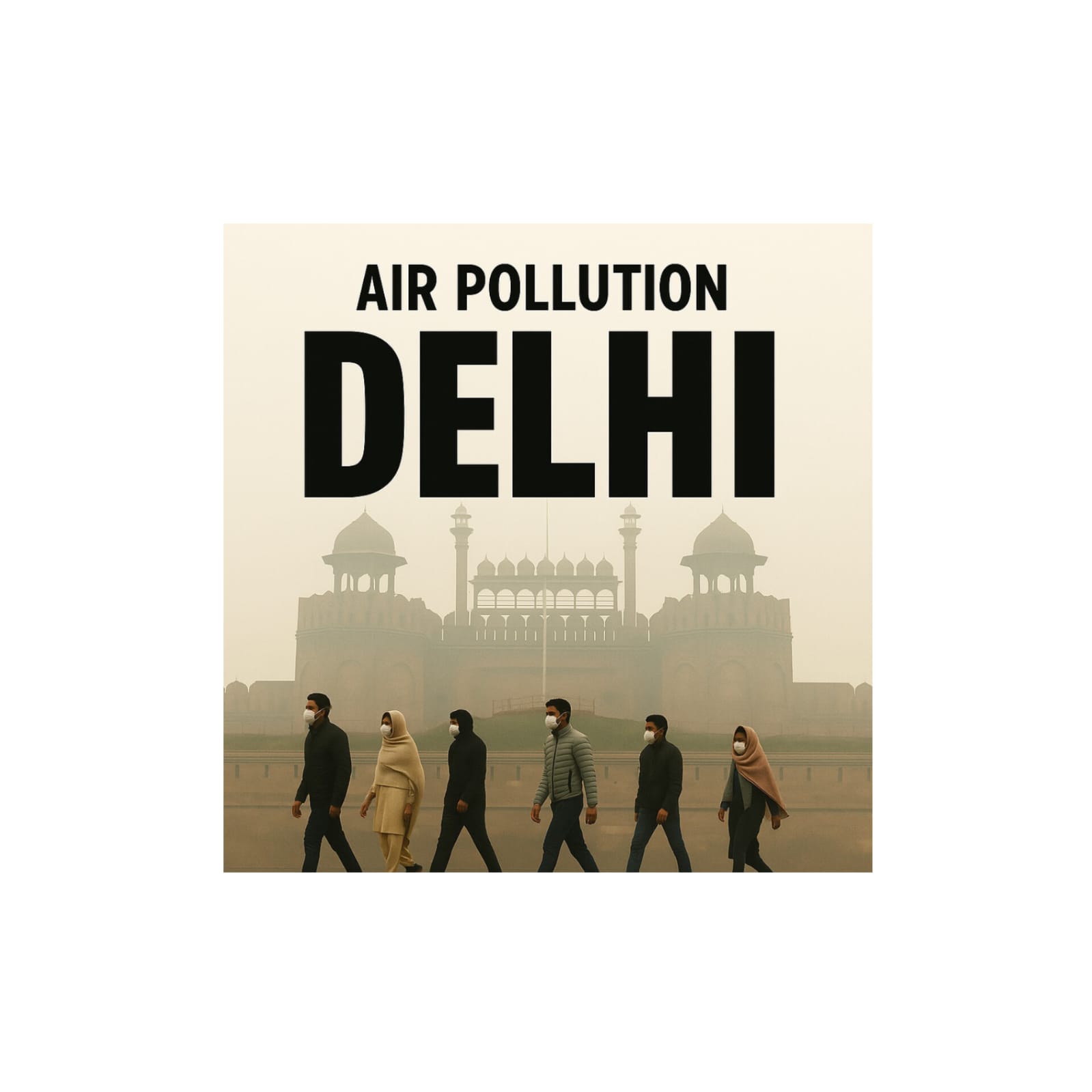
Delhi Chokes: The Fight for Every Breath in India’s Capital
Delhi — India’s vibrant and chaotic capital — has become infamous not just for its traffic jams or population density, but for something far more dangerous: its air. Each winter, a suffocating blanket of smog engulfs the city, turning the skyline grey and leaving millions struggling to breathe.
In 2025, Delhi’s Air Quality Index (AQI) crossed 500 in several areas — a level classified as “hazardous” by international standards. The situation is not a sudden disaster but a result of years of unchecked urbanization, vehicular emissions, industrial pollution, and the recurring menace of stubble burning in neighboring states.
With over 11 million vehicles on the roads and shrinking green cover, Delhi’s atmosphere is loaded with fine particulate matter — PM2.5 and PM10 — microscopic toxins that penetrate deep into the lungs and bloodstream. Every winter, falling temperatures trap these pollutants near the surface, forming a dense layer of smog.
The seasonal smoke from crop residue burning in Punjab and Haryana merges with emissions from vehicles, factories, construction sites, and diesel generators. Open waste burning only adds to the toxic brew, making Delhi’s air one of the most polluted on the planet.
Hospitals across the capital report a sharp rise in cases of asthma, COPD, and other respiratory illnesses, particularly among children and the elderly. Long-term exposure to polluted air is known to reduce life expectancy and cause irreversible lung damage. For many Delhiites, stepping outside now feels like an act of endurance rather than a routine.
Efforts like the Graded Response Action Plan (GRAP), the odd-even traffic scheme, and the establishment of green zones have made headlines — but the impact remains limited. Experts argue that piecemeal measures cannot solve a problem of this magnitude. What’s needed is an integrated approach — combining policy enforcement, technological innovation, and citizen participation.
The rise of air quality sensors, AI-based pollution tracking, and urban air purifiers offers glimpses of hope. Yet, technology alone isn’t the answer. The real transformation lies in changing daily habits — using public transport, carpooling, reducing waste burning, and planting trees.
Delhi’s pollution crisis is not just an environmental challenge — it’s a public health emergency. Clean air is a fundamental right, not a luxury for a few. It demands collective responsibility — from governments that enforce stricter standards, industries that adopt cleaner practices, and citizens who make conscious choices.
Only then can Delhi dream of reclaiming its blue skies — and the simple, essential act of breathing without fear.